Ghost Campfire Embroidery
First Stitch, First Impression
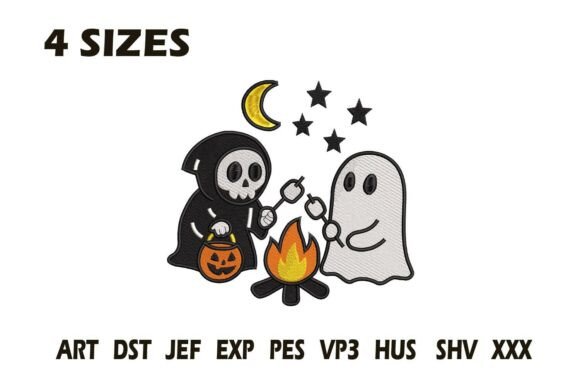
When I opened Ghost Campfire Embroidery for the first time—on my embroidery software, zoomed in at 200%—I didn’t see just another Halloween motif. I saw a quiet narrative: flickering flames with subtle transparency, a soft-edged ghost hovering mid-air above them, and a gentle asymmetry that avoids cartoonish rigidity. It’s not spooky-screaming or sugar-rush cute. It’s atmospheric. Moody but warm. The kind of design that makes someone pause mid-scroll on Etsy—not because it’s loud, but because it feels *intentional*.
A Real Project Test: The Late-October Tote Bag
Last week, I prepped Ghost Campfire Embroidery for a custom order: a heavyweight natural cotton tote for a local indie bookstore’s Halloween pop-up. Their request? “Something whimsical but not childish. Not too busy. Feels like a story you’d tell by firelight.” That’s exactly where this design lands.
I stitched it centered on the front panel, using matte black thread on oat-colored fabric. The satin stitch around the ghost’s outline held crisp definition, while the fill stitches in the campfire used a low-density gradient effect—no puffiness, no thread buildup, even at 4.2 inches wide. On the finished tote, it read cleanly from six feet away, but up close, you noticed texture: tiny running-stitch embers, a whisper of negative space between flame and spirit. Customers didn’t just say, “Oh, cute.” They said, “Who designed that?”—a quiet win for brand credibility.
Where It Shines (and Where It Asks for Care)
Ghost Campfire Embroidery thrives on stable, medium-weight fabrics: canvas totes, brushed cotton sweatshirts, linen tea towels, and structured baby blankets. Its balanced stitch density means it holds up beautifully on items meant to be washed regularly—no fraying edges or thread pull-out after three cycles in cold water and air-dry.
But—and this is key—it’s not a one-size-fits-all machine embroidery design. On thin or stretchy fabric (think lightweight tees or ribbed knit caps), I recommend testing with tear-away + cut-away stabilizer combo. The ghost’s wispy lower edge and flame tips rely on clean tension; without proper support, those fine elements can blur or pucker. Likewise, avoid placing it directly over seams or curved surfaces like crown brims unless you’ve verified hoop clearance and digitizing flow.
Dark fabrics? Yes—but check contrast early. I ran a quick black-and-white printable mockup before stitching on charcoal fleece. The ghost’s semi-transparent layer lost definition in grayscale, so I swapped to heather gray thread instead of pure black. Small detail matters: that decision kept the design legible and preserved its gentle tone.
What This Design Does for Your Craft Business
- Builds trust through restraint: Unlike over-digitized Halloween files packed with glitter effects or excessive underlay, Ghost Campfire Embroidery breathes. That signals craftsmanship—not just digital convenience—to buyers browsing your Etsy shop or boutique rack.
- Elevates perceived value: A single well-executed embroidered patch or pillow cover with this design reads as curated, not mass-produced. It invites pricing confidence—especially when paired with natural fibers and thoughtful presentation.
- Supports brand consistency: Whether you’re embroidering baby onesies for a nursery-themed line or limited-run aprons for a seasonal café collab, Ghost Campfire Embroidery adapts without shouting. It doesn’t dominate—it complements.
- Performs in gifting contexts: I’ve seen it sewn onto kitchen towels gifted at fall housewarmings and stitched onto organic cotton drawstring bags for teacher appreciation. Its warmth translates emotionally—no forced “spook,” just shared nostalgia.
Designer Notes You’ll Actually Use
Before stitching Ghost Campfire Embroidery into your next finished product, do these five things:
- Run a test on scrap fabric matching your final substrate—including stabilizer type and thread colors. Watch how the flame’s taper behaves at the top edge.
- Zoom in on small corners in your embroidery software: confirm no floating stitches or orphaned jump threads near the ghost’s hands or flame base.
- Check licensing terms carefully. If you plan to sell physical items (custom apparel, embroidered patch kits, tote bag designs), verify commercial use is permitted. Same goes for digital resale—if you’re a digital embroidery file seller, don’t assume redistribution rights.
- Compare light/dark backgrounds side-by-side using simple mockups. Adjust thread hue if needed—e.g., charcoal gray instead of black on deep navy.
- Confirm hoop size compatibility. While it fits standard 4x4 hoops comfortably, pushing it to 5x7 for larger merchandise requires checking whether the digitizing maintains proportion and clarity across scale.
Final Thought: It’s Not Just Halloween—It’s Vibe Alignment
Ghost Campfire Embroidery isn’t a seasonal checkbox. It’s a mood anchor. I’ve used it outside October—stitched in cream thread on an ivory linen pillow for a cozy reading nook launch, or scaled down to 2.5 inches for a minimalist baby embroidery set. Its strength lies in emotional resonance, not trend-chasing.
If your craft business values authenticity over algorithm bait—if your customers respond to subtlety, texture, and storytelling—this machine embroidery design earns its place in your active design assets. It doesn’t beg for attention. It earns it, stitch by careful stitch.