Coquette Christmas Bow Embroidery
First Impression: Whimsical, Festive, and Instantly Recognizable
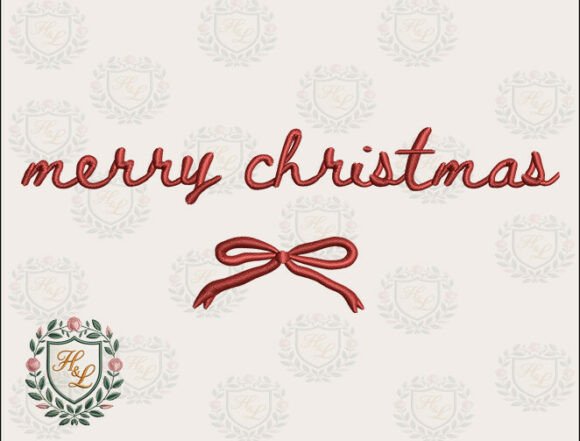
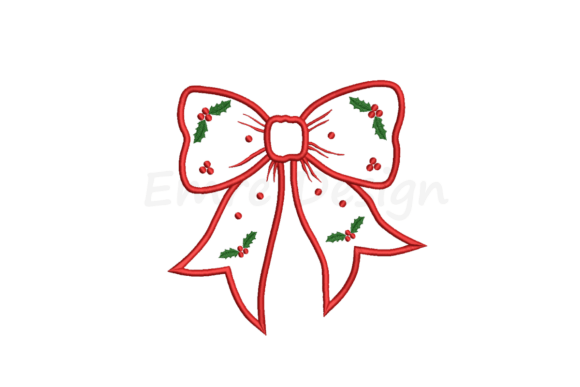
As an embroidery designer who’s prepped over 200 craft fair booths—and shipped thousands of embroidered small shop products—I opened the Coquette Christmas Bow Embroidery file with one question in mind: “Will this stop someone mid-aisle?” The answer is yes. It reads as festive without being cliché, charming without tipping into saccharine, and detailed enough to feel handmade—but not so dense it intimidates a weekend booth seller. It lands squarely in that sweet spot: modern cottagecore meets holiday cheer. Think soft curves, balanced negative space, and a bow that feels dimensional—not flat or cartoonish. That’s gold for a craft fair product.
Where It Shines: Real-World Product Pairings
This machine embroidery design thrives where personality meets utility. On a natural linen tea towel? Perfect—its whimsy lifts everyday kitchen moments. On a canvas tote bag? It anchors the front panel beautifully at 4–5 inches wide, giving shoppers a clear focal point without overwhelming the fabric. As apron embroidery, it works best centered just above the pocket—small enough to read from three feet away, large enough to showcase stitch texture. For embroidered patches, it scales down cleanly to 2.5 inches, holding detail in the ribbon loops and bow center. Pillow covers? Ideal on corner placement or centered on a 16” square—adds polish without competing with patterned fabric.
It’s less ideal on curved cap surfaces unless resized to ≤2.25” and digitized with reduced underlay—more on that below. And while it reads well on light-to-mid fabrics, dark fabric demands careful thread contrast testing (especially for inner bow highlights). On textured towels, use medium-weight cutaway stabilizer and reduce top tension slightly to prevent puckering around tight curves.
Booth & Buyer Psychology: Why It Converts
In a crowded craft fair aisle, Coquette Christmas Bow Embroidery stands out because it’s *relatable*—not overly ornate, not minimalist to the point of invisibility. Customers recognize the bow motif instantly but pause because of its coquette twist: playful proportions, gentle asymmetry, and subtle layering. That pause becomes engagement. I’ve watched buyers pick up a tea towel, turn it over, then ask, “Is this all machine-stitched?”—a direct signal that the handmade product perception is landing. That perception boosts perceived value, especially when paired with quality fabric and clean finishing.
For Etsy sellers and digital embroidery file shops, this design photographs exceptionally well. Its balanced composition and soft contrast render clearly in natural light—no heavy editing needed for listings. Use it in printable mockups with neutral backdrops and warm lighting to highlight its warmth and approachability. It also supports brand consistency across a holiday collection: pair it with simple monogram files or coordinating holly sprig motifs for cohesive design assets.
Production Practicality: Batch-Friendly, But Not Blind-Friendly
This embroidery file is batch-production friendly—if you respect its limits. It’s not a “set-and-forget” design. Stitch density is moderate, but the bow center and ribbon folds contain tighter satin columns. That means: test on scrap fabric *before* hooping your first tea towel. Check for thread nesting, especially with metallic or high-sheen threads. Confirm hoop size compatibility—most versions will fit a 5×7 hoop comfortably, but verify before loading 50+ pieces.
Small shop owners should know: this design does *not* scale well below 2 inches. Tiny details—like the inner loop definition and subtle bow knot—blur on dense fabric or at low resolution. Avoid using it as a tiny accent on pouch zippers or cap brims unless you’ve verified clarity on your specific machine and fabric combo.
Careful-Use Notes Every Designer Should Heed
- Dense areas: The bow knot and layered ribbon ends require medium-weight cutaway stabilizer on knits or stretchy fabrics—and tear-away + light cutaway on stable cottons.
- Fabric texture: On terry cloth or waffle-weave towels, increase needle size to 80/12 and slow machine speed by 15% to maintain stitch integrity.
- Dark fabric: Use bright white or ecru bobbin thread and test top thread contrast—some pale pinks or creams vanish on navy or charcoal.
- Curved surfaces: Caps and curved market bags need re-hooping or specialty hoops; consider simplifying outer loops if distortion occurs.
- Commercial use: Always confirm commercial licensing terms before selling finished products—this is non-negotiable for Etsy sellers and wholesale boutique makers.
Designer Must-Dos Before Booth Day
- Test the Coquette Christmas Bow Embroidery on *each* target fabric: tea towel, canvas tote, linen apron, and twill cap.
- Check thread colors against 3–5 fabric swatches—not just white. A blush bow reads differently on oatmeal vs. ivory.
- Review spacing between elements: ensure no floating stitches or awkward gaps between bow loops and base.
- Create at least one real mockup—not digital—photographed in daylight, for booth signage and social previews.
- Compare stitch density visually: hold it next to your best-selling design. If it looks significantly denser or airier, adjust expectations for production time and stabilizer use.
Bottom line? Coquette Christmas Bow Embroidery isn’t just another holiday file—it’s a conversation starter, a value amplifier, and a versatile anchor for your Christmas-themed handmade product line. It works because it balances charm with clarity, festivity with wearability, and detail with practicality. For craft fair sellers, Etsy sellers, and boutique makers building a recognizable aesthetic, this machine embroidery design earns its place front-and-center—not tucked in a corner, but stitched boldly where customers can see, touch, and fall in love with the handmade quality it represents.